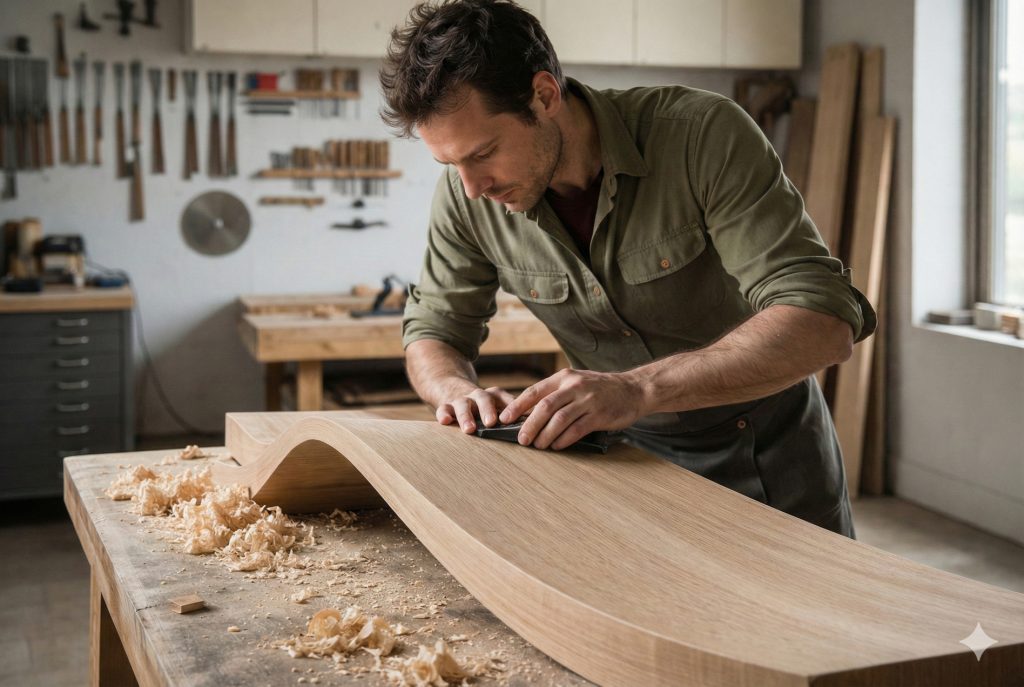
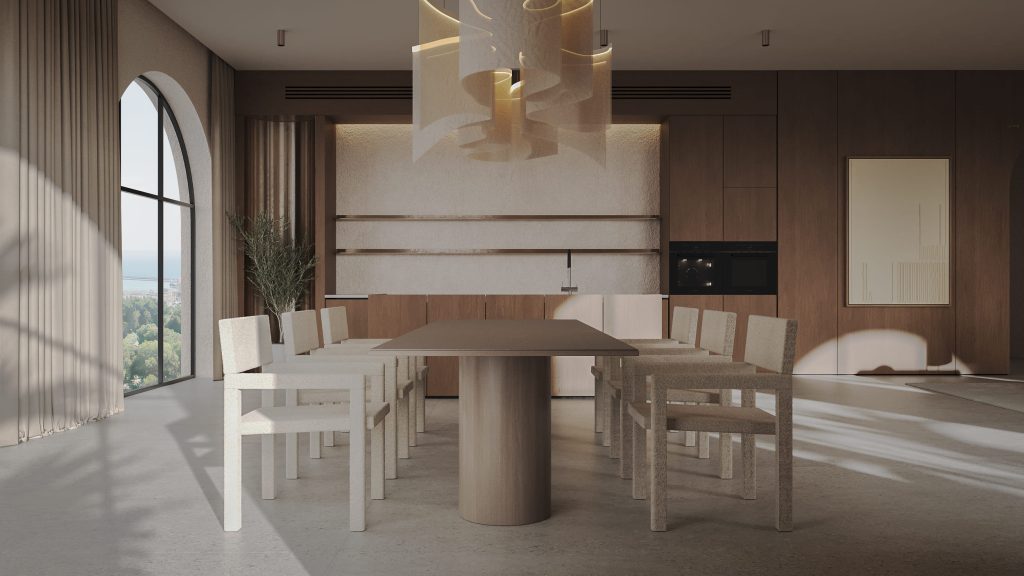
True luxury lies in what you cannot see. In an era of fast furniture and adhesive-based assembly, we return to the structural integrity of traditional joinery—exploring how wood-to-wood connections not only ensure durability but create a dialogue between material tension and architectural form.
The philosophy of our studio is grounded in a simple premise: a piece of furniture should be as permanent as the architecture it inhabits. This permanence is rarely achieved through screws or glue alone, which degrade over time. Instead, it is found in the physical interlocking of fibers —the friction and compression of wood against wood.
Beyond the Surface Aesthetic
Modern minimalism often mistakes simplicity for lack of complexity. However, a truly minimal surface requires the highest degree of internal complexity. To remove hardware—handles, hinges, visible screws—one must engineer solutions that are integral to the material itself.
Wood is a hygroscopic material; it breathes. It takes on moisture from the air and releases it, expanding and shrinking across the grain. A rigid connection, like a steel bracket screwed into place, fights this movement, eventually causing the wood to crack or the screw to loosen.
“The joint is the beginning of ornament. And that must be distinguished from decoration. The joint is where the forces of the structure are resolved.”
Internal complexity in minimal design
- Hidden Hardware Elimination: Removing screws and fasteners forces the reliance on friction and mechanical interlocking, distributing stress more evenly.
- Load Distribution: Unlike a screw which creates a single stress point, a tenon distributes weight across a broad surface area of grain.
- Wood Expansion Strategy: Internal joints are designed with “air gaps” to allow for up to 3mm of seasonal expansion without cracking the exterior finish.
- Structural Tension Balance: Opposing grain directions are utilized to create a state of equilibrium, preventing warping over decades.
The Physics of Wood Movement
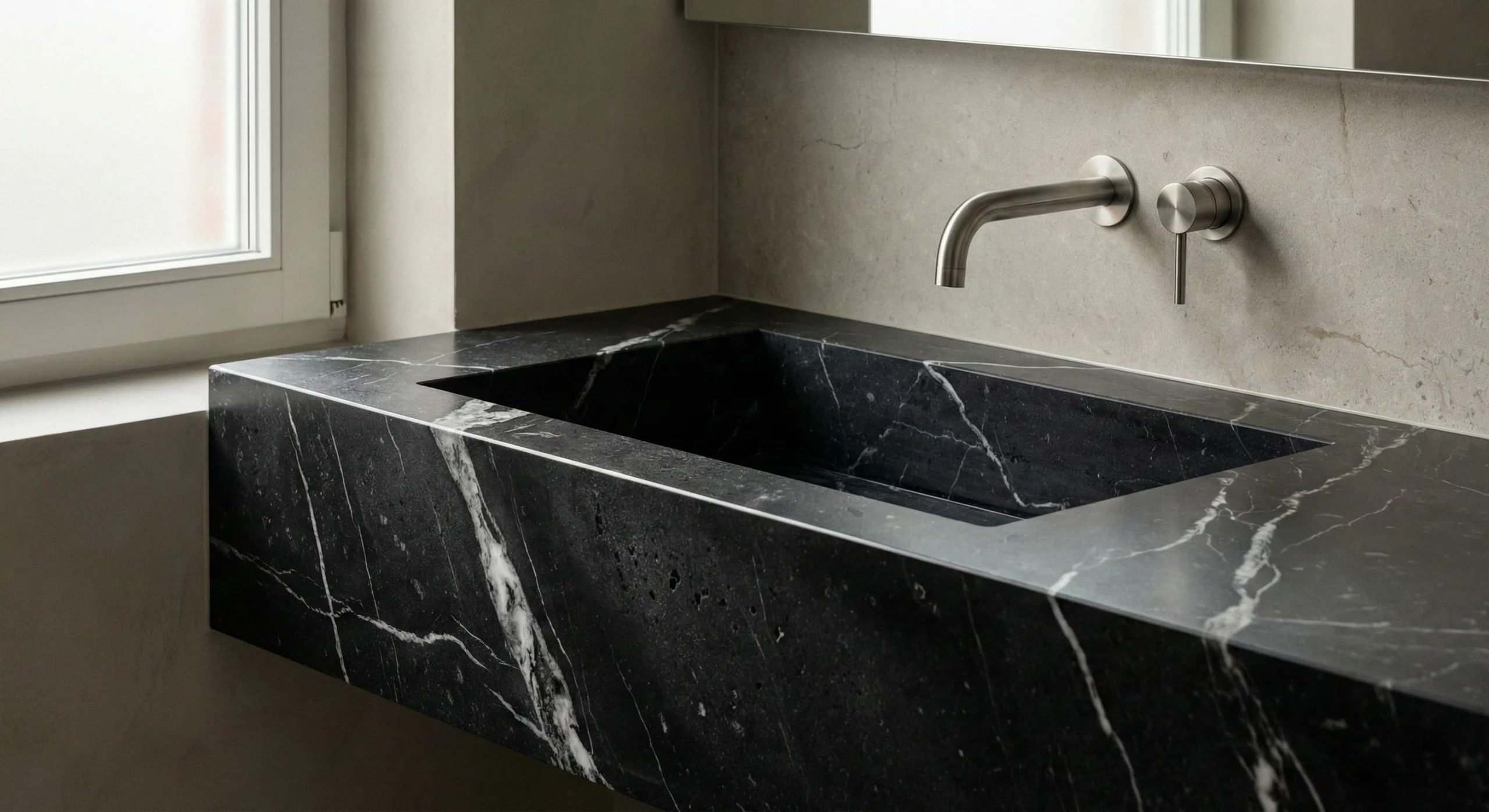
Micro-Movement and Structural Stability
- Expansion Across Grain
- Compression Resistance
- Peg Tension Locking
- Seasonal Calibration
Modern minimalism often mistakes simplicity for lack of complexity. However, a truly minimal surface requires the highest degree of internal complexity. To remove hardware—handles, hinges, visible screws—one must engineer solutions that are integral to the material itself.
 Featured Insight